
Food is an important part of supporting your child throughout the day. Making sure your child is well nourished helps them grow and develop — not only physically, but mentally as well. During school hours, when their brains are working harder, the right nutrition supports their ability to focus, learn and play. With a better understanding of the food groups and their benefits, and some easy and healthy lunchbox ideas to guide what and how much to pack, this daily routine can also become a positive learning experience for your little one.
The 5 food groups
Healthy foods come from the five food groups (grains, vegetables, fruit, dairy, and meats and alternatives). Each group provides different nutrients that support your child’s growth and development.
- Grains (wholegrain and / or high cereal fibre) carry fibre, vitamins, minerals and antioxidants.
- Vegetables, legumes, and beans are high in magnesium, vitamin C and folate
- Fruits have a variety of fibre, water, minerals and phytochemicals. As well as Vitamin C and E, Potassium and magnesium
- Milk, yoghurt, cheese or their alternatives contain calcium, protein, iodine, vitamin A, vitamin D, riboflavin, vitamin B12 and zinc.
- Lean meat and poultry, fish, eggs, tofu, nuts and seeds are a source of iodine, iron, zinc, vitamins, especially B12, and essential fatty acids
Understanding the food groups also helps children learn about the importance of nutrition, teaching them what their bodies need and what each group offers.
How to pack a healthy lunchbox?
Once you understand the food groups, packing a healthy, balanced lunch becomes much easier. When you break it down and get into a routine, preparing a nutrient-filled lunch for your child can be a smooth, everyday process.
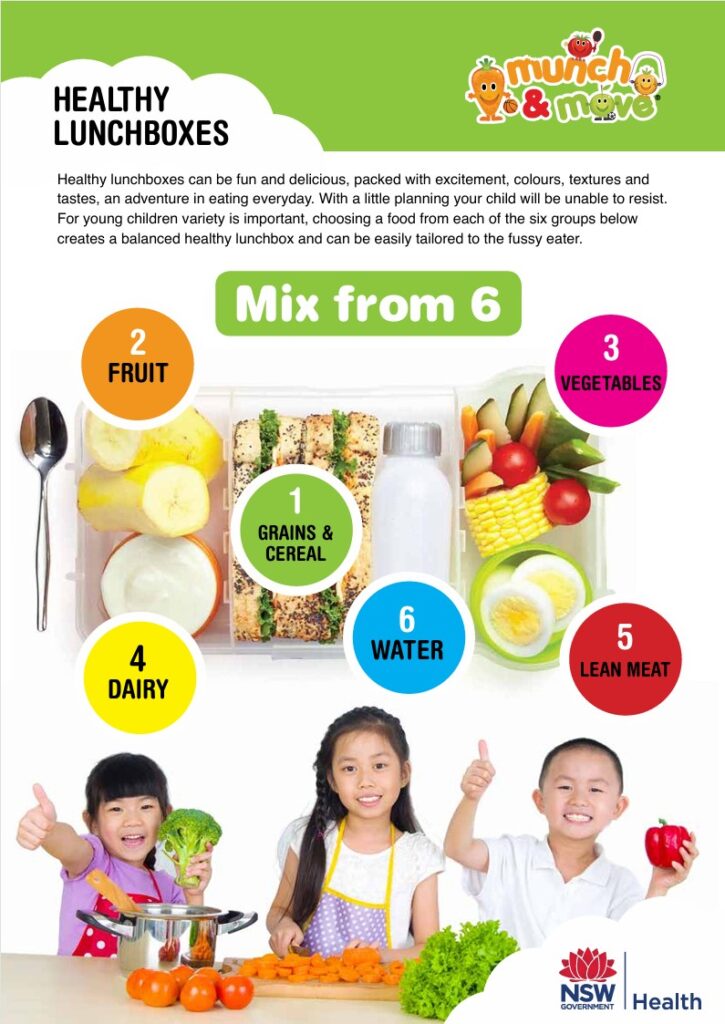
Following the Munch & Move approach, a simple lunchbox can include:
- A main meal
- A small snack
- A fruit or vegetable to munch on
- And of course, water.
A main meal may contain most of the food groups. For example, a turkey sandwich on wholemeal bread with cucumber, lettuce, and avocado covers lean meat, grains, and vegetables. A small snack might include yogurt, flavoured milk, custard, or cheese with crackers. The fruit or vegetable to munch on can be fresh fruit or fruit canned in natural juice.
Choosing what to include
Including foods from all five food groups, along with water, can be simple. Each food group offers a range of options, making it easy to mix and match based on your child’s preferences.
To help make choosing what to include even easier, we’ve included the Munch & Move Healthy Lunchboxes fact sheet, with practical guidance available in English and a range of translated languages via the links below.
Healthy lunchbox fact sheet – Arabic
Healthy lunchbox fact sheet – Vietnamese
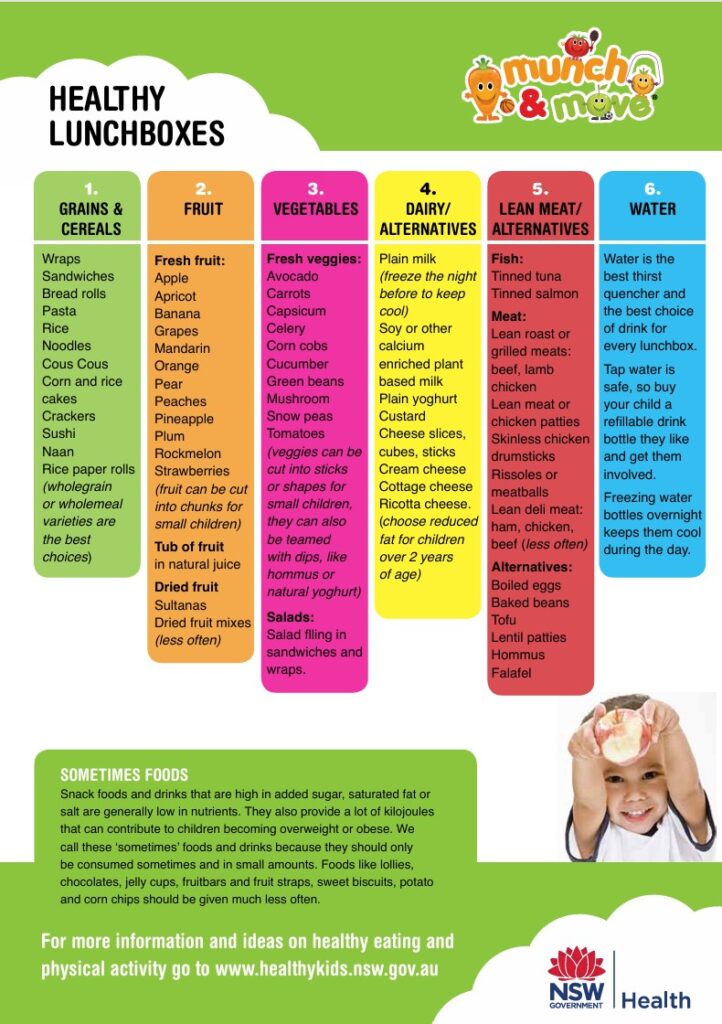
If your child attends one of our before and after school care, healthy breakfasts and afternoon teas are also provided, helping them start and finish the school day well nourished.
Get your child involved
School is a time for children to explore independence, so involving them in daily and weekly activities such as packing their lunchbox, helping with the shopping list and planning meals gives them a chance to learn about healthy eating while building autonomy.
If your child is yet to start school, practicing packing their lunchbox can help them become familiar with routines and build their confidence before starting kindergarten. Programs like our School Readiness Programs focus on giving children a strong foundation for a successful transition to school.
We all have likes and dislikes, so being part of the decision-making process is an excellent way to help your child learn what works for them.
Healthy lunchbox ideas using an interactive lunchbox builder
For a fun and interactive way to explore healthy lunchbox ideas, you can use the Healthy Made Tasty lunchbox builder. It lets you mix and match different food choices, with helpful tips to support easy preparation at home.
It’s also a great activity to do together with your child, helping them feel involved and confident in making healthy food choices.

Key takeaways
Choosing what to pack for your child can sometimes feel overwhelming. Understanding the benefits of each food group, while keeping your child’s tastes in mind, can help you make balanced choices that support their learning, focus and play.
Involving children in the process also helps them learn about food, build independence and develop confidence in making choices that feel right for them.
Explore our School Readiness Programs for a smooth transition into kindergarten, or find out more about our Occasional Care and Outside of School Hours Care (OSHC) services for children and families.
For more resources and tips for setting up healthy eating habits, visit: https://www.nsw.gov.au/health-and-wellbeing/healthy-living/munch-and-move/parents-and-carers